Beniamino Servino
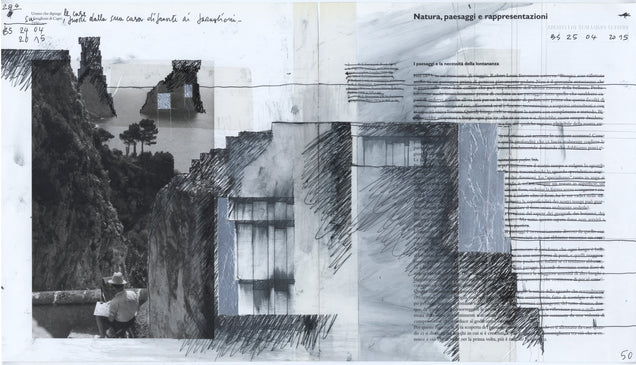
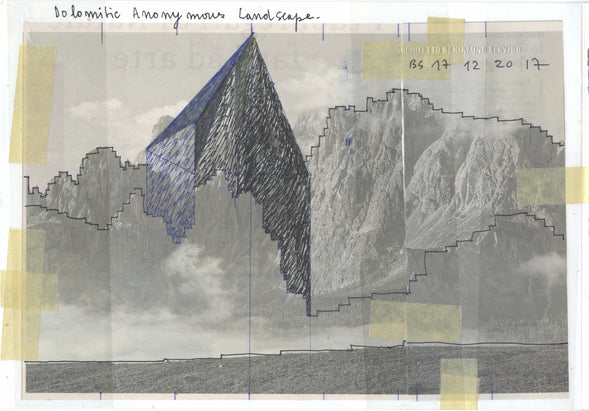
Beniamino Servino (San Giuseppe Vesuviano, 20 May 1960) lives and works in Caserta. He graduated in Architecture from the University of Naples “Federico II” in 1985 under Michele Capobianco; in 1986 he founded his practice and in 1994 launched SERVèN, a “thinking engine” in which drawing, collage, and writing become a method: not a decorative supplement to design, but a critical device capable of turning peripheries and landscapes in the process of being consumed into a repertoire of archetypes. For years his work has unfolded on two parallel planes: architectural design and theoretical research pursued through architectural drawing, a field in which he has long held a position of outstanding prominence on the contemporary Italian scene. His importance lies in a rare stance: building as an act of measure and, at the same time, producing images that challenge monumentality as a style, reclaiming it instead as a necessity, up to an updated idea of “dignified poverty” developed in the years of crisis. His works include the Small church in Gioia Sannitica (1990); the municipal nursery school in Formicola (design 1990, completed 2004; nominated for the EU Mies Awards 2005); and the House in Pozzovetere, Caserta (2001 to 2006), awarded the International Award Architecture in Stone (2007), Arch and Stone ’08 (4 November 2008), and the Special Honour of the German Natural Stone Award (2011). In 2002 and 2004 he was nominated for the Mies van der Rohe Award. He was invited to the Venice Biennale in 2002 (micro building 4 by 4 by 4), in 2008 (Obus incertum), and in 2010 (L’Osservatore Veneziano), and to the Italian Pavilion in 2014 (Innesti or Grafting). He has also designed furnishings exhibited at Abitare il Tempo (Verona, 1996) and at the Scuderie di Palazzo Reale (Naples, 1997).